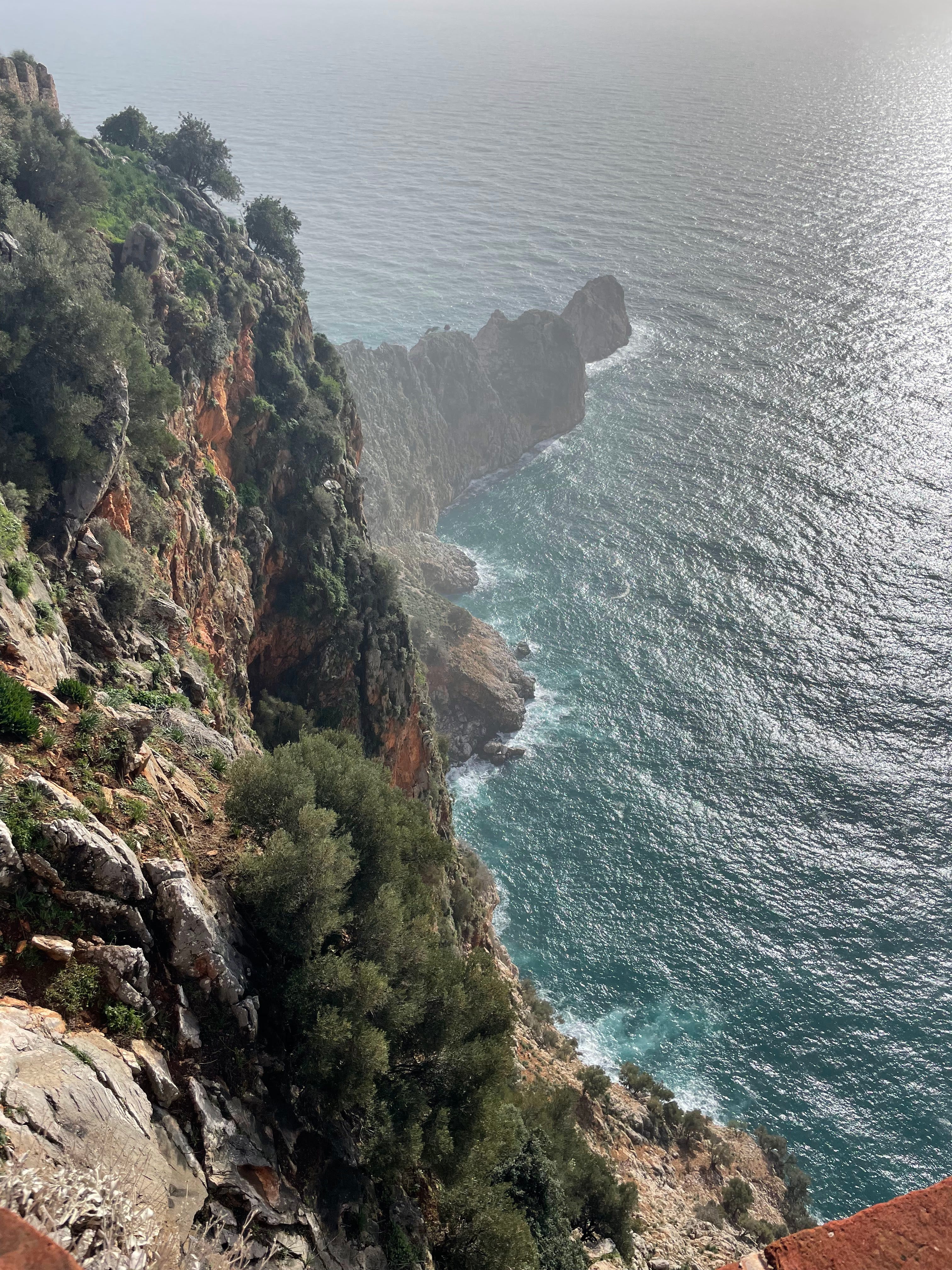
Our road snaked heavily: rolling through villages and towns, between dramatic peaks and rough, blue coastline. February’s weather was similarly pendular. Swinging between sun and downpour, Turkey’s Mediterranean landscape showed off in skirts of gold and gowns of opaque gray. The Demre River plain smelled of ripening citrus and hot plastic when we exited our rental car.
Just a day trip from the popular tourist destination of Antalya, the ancient city of Myra lies nestled under the Taurus Mountains and along the Demre River. For nearly two and a half thousand years it has anchored this alluvial plain, guarded by steep limestone cliffs and the Mediterranean Sea.
Guidebooks call this the Turquoise Coast, a phrase rather useful for selling cruise cabins and piña coladas. But once you drive into the plain, the coast loses its tourist-ready polish. The road relaxes into tight switchbacks, pinched between the scrub oak of the Taurus range and the rocky cliffs guarding against the shoreline. You pass fewer waterslides and more families fishing. The area appears not as an antique jewel, but as an authentic place of life and work. Here, the coast is not about cocktails or hospitable smiles.
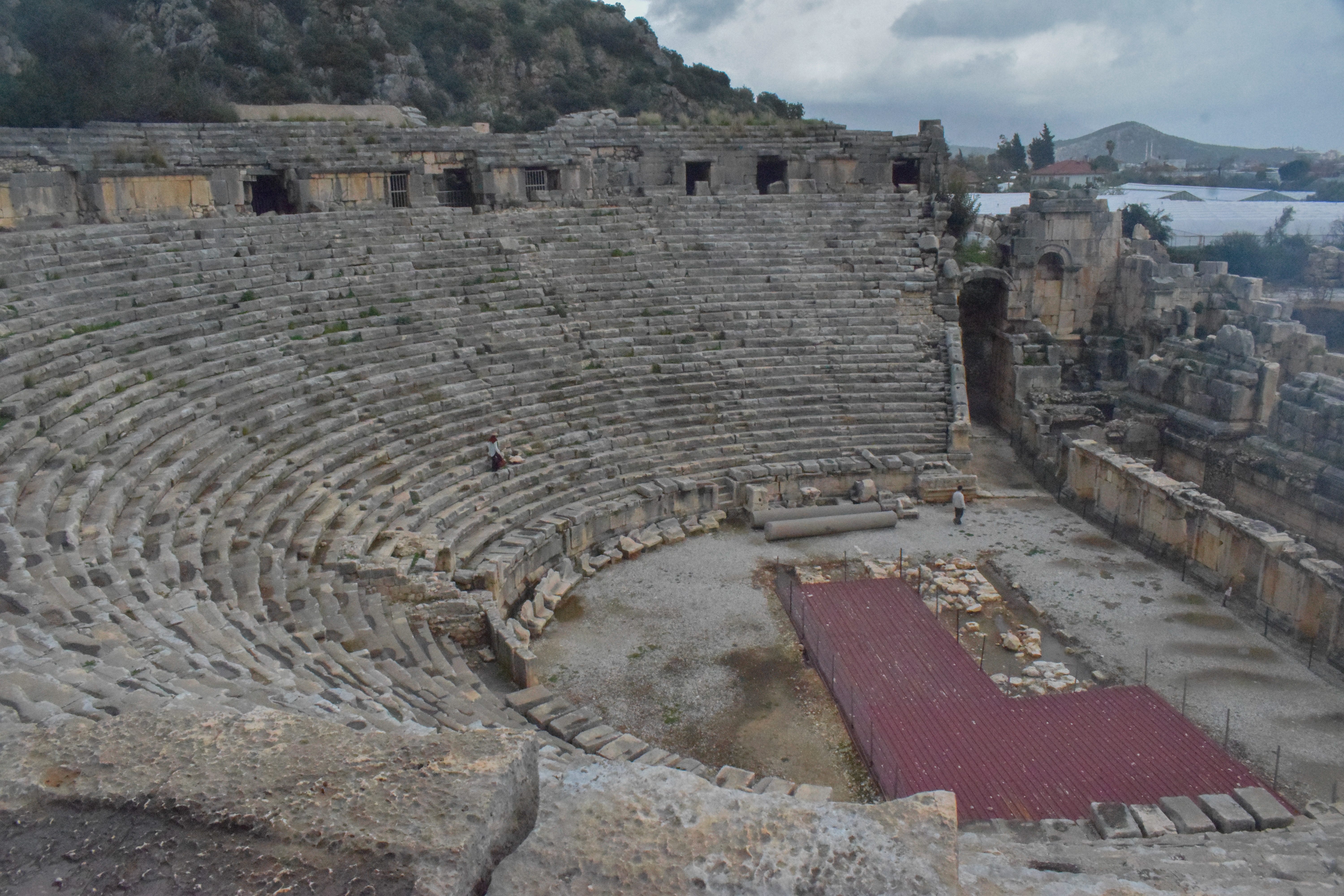
Standing at Myra’s sandy entrance, myself and two other tourists were ticketed and allowed into the archaeological site. “Myra was a town built by water,” a traveler named Georgios nodded toward me. A man in his later 60s, Georgios was dressed from head to toe in khaki and carried a well-worn composition notebook. With a lilting accent, he looked out at the expanse from the upper tier of Myra’s amphitheater. “I have been wanting to see this for a very long time.” He wiped his free hand on his vest.
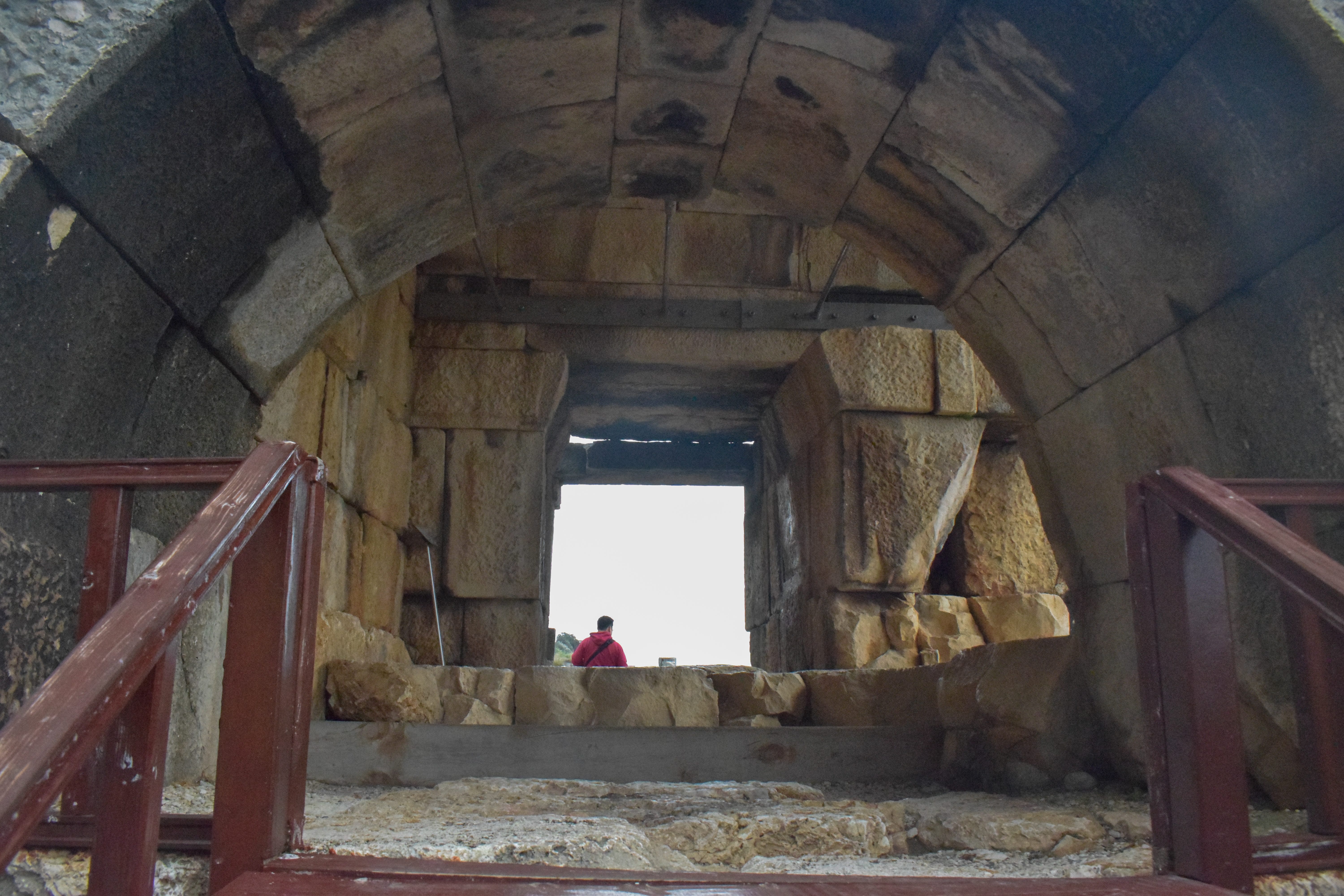
“Watch this,” he said, and descended the stone steps faster than his frame suggested he would be able. Stopping at the center of the sandy orchestra many meters below, he clapped twice to test the decay of the sound, then began to sing. The acoustics were beautiful, the sound traveling up to where I sat astoundingly well. An impromptu historical reenactment. The site was preserved in spirit by the immense weight of its years. It was impossible to wrench yourself out of its history. I was affected by the images it conjured: bustling ticket-checkers outside the same amphitheater entrances that I used where I then ascended the very same stairs, fingers grazing the same cut limestone, as people thousands of years ago. Looking out at the same Mediterranean Sea and the same rock-cut facades was the privilege of living history rather than picturing it.
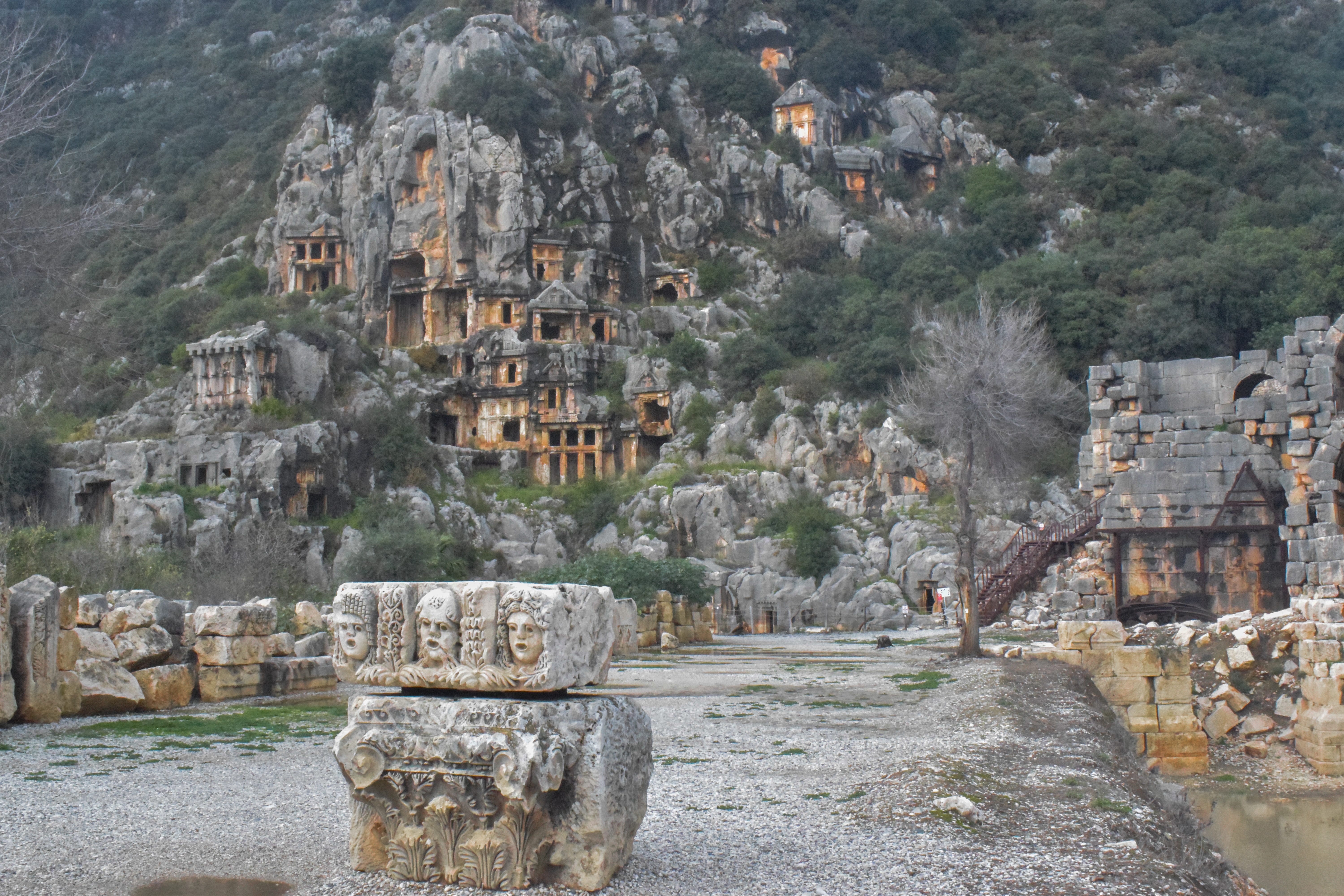
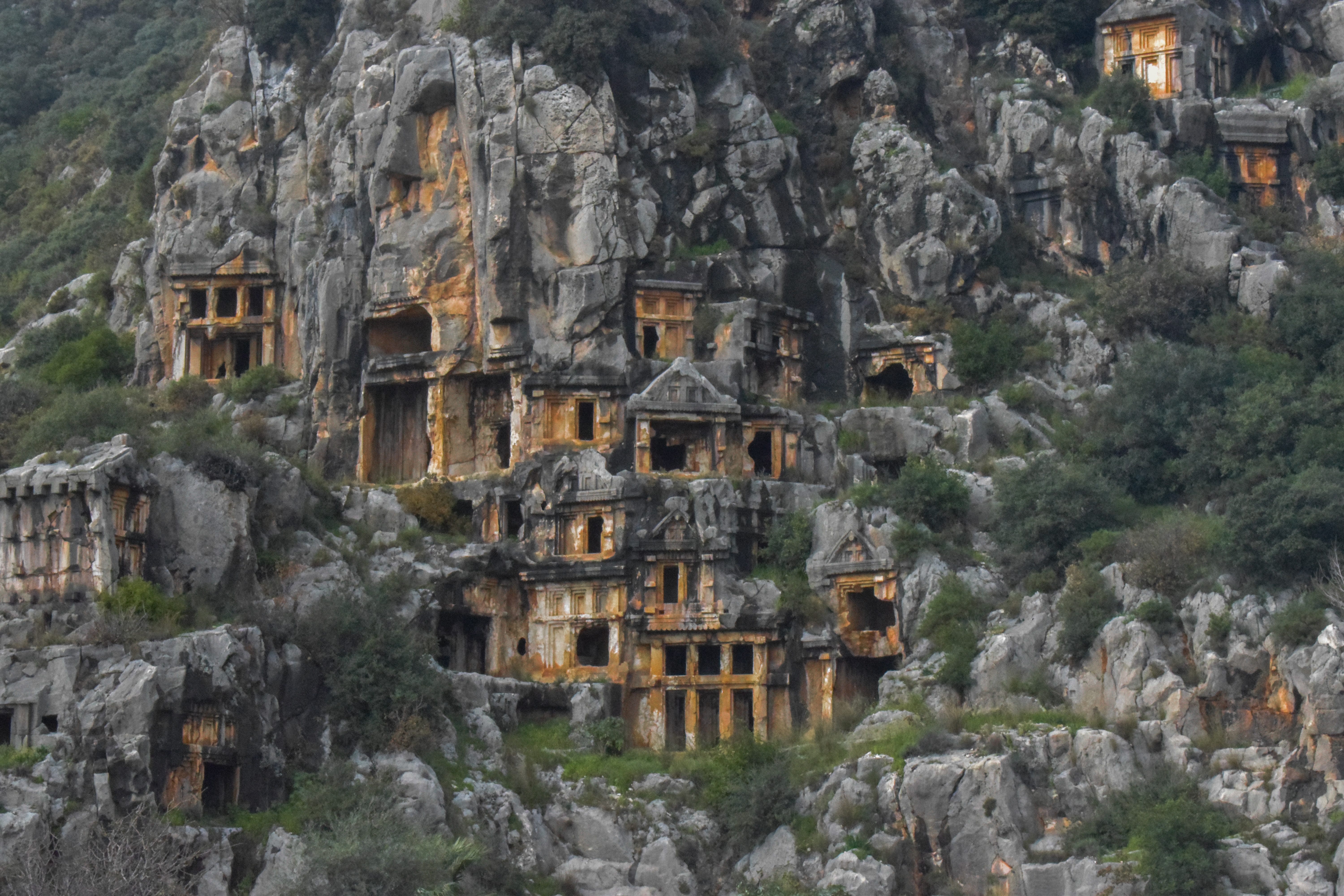
Once part of the Mediterranean’s greatest maritime engines, Myra was a thriving Lycian capital. Connected by river to the major sea harbor settlement of Andriake, the city’s Necropolises sit carved directly into the sheer cliff faces to the Western and Eastern borders. Crafted around the 4th century BCE, the tombs were made to mimic domestic Lycian timber structures. Faux wooden beams, door frames and pillared facades are carved into the rock face and display for the tourist a home life long since vanished. In the Ocean Necropolis, the tomb of Hurttuweti gifts the visitor a friendly introduction to himself and his family. A relief of Hurttuweti with two women caring for him at his bedside, likely his wife and daughter, allows the viewer to meet and greet a family from thousands of years ago. Farther along the gorge, where the Demre stream emerges from the mountainside, sits the River Necropolis. Its iconic feature, the Painted Tomb, dates to between 360 and 340 BCE and showcases an impressive eleven life-sized figures carved into the rock face. As late as 1840, when Sir Charles Fellows documented the site, these figures retained distinct traces of red, blue and yellow pigment.
The relationship Myra maintained with its neighboring river was both functional and catastrophic. The Demre served as both architect and executioner of this settlement. It provided the city with a fertile alluvial engine only to reclaim the metropolis under meters of heavy silt. After centuries of continuous agriculture, timber harvesting and livestock grazing, soil erosion along the upper catchment of the Myros (now Demre) River increased dramatically. Seasonal rains washed this loose topsoil down the mountain gorge. Reaching the flat coastal basin, the river dropped massive loads of sediment across the plain and into its mouth. Myra’s port relied on a navigable channel and harbor basin, but as the silt accumulated, the harbor shallowing made it impossible for Mediterranean cargo and grain ships to dock, severing Myra from regional trade networks by the mid-Byzantine era.
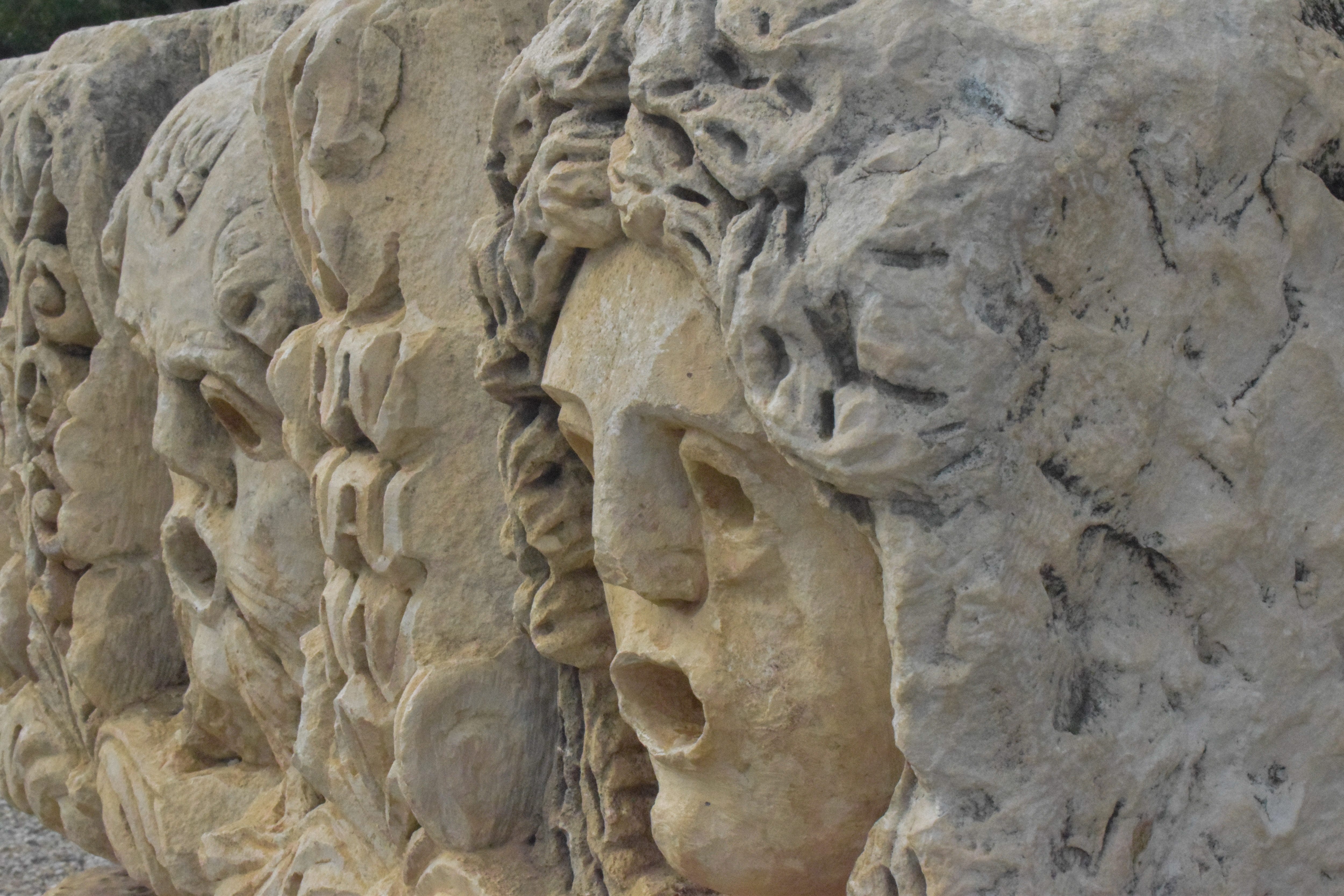
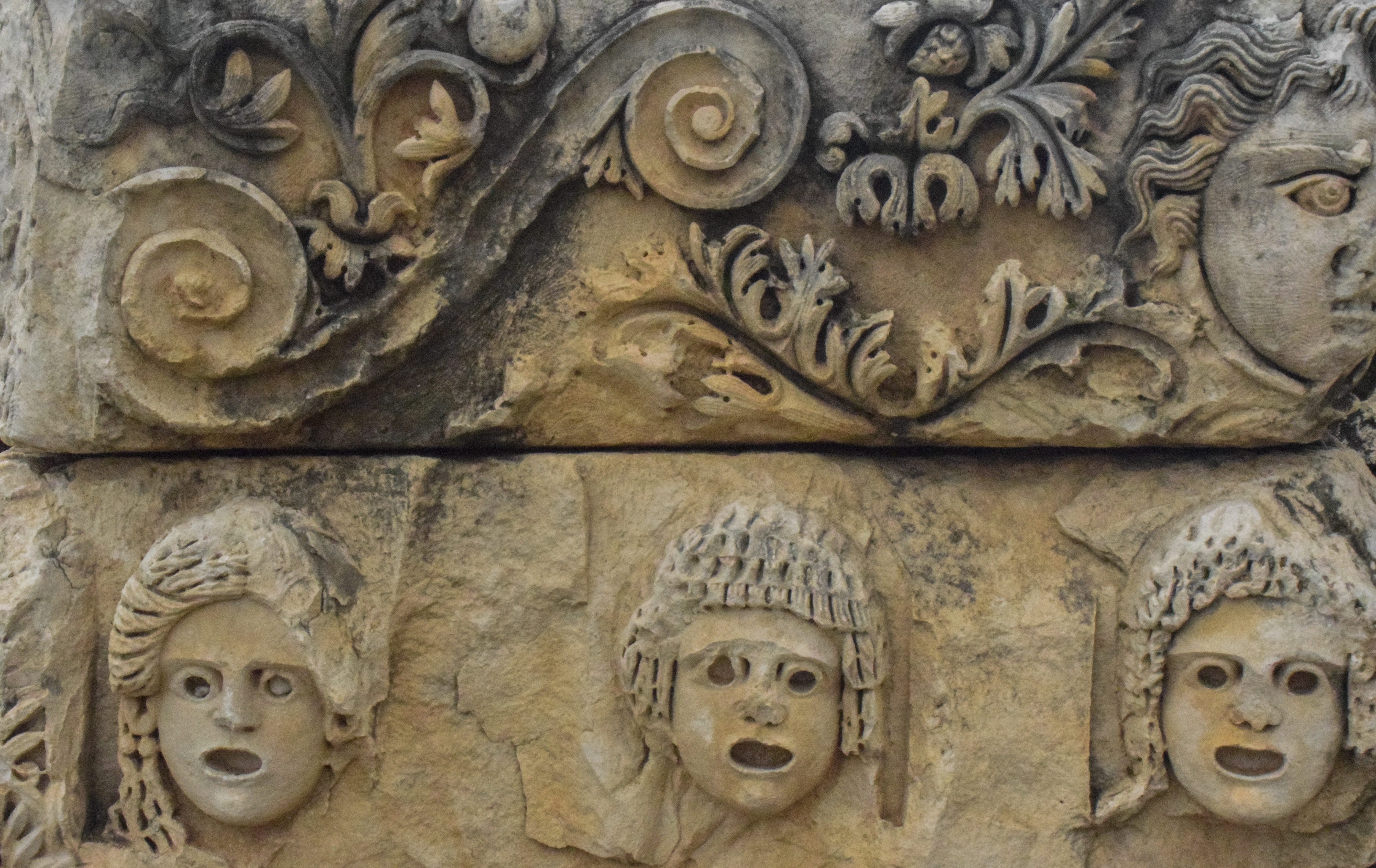
By then, Rome had replaced the city’s patron Artemis Eleuthera with the civic bureaucracy of Diana and built a monumental theater directly into the base of the cliffs, taking a native sacred geography and turning it into an imperial entertainment stop. By the 4th century CE, the historical Bishop of Myra, better known by the name Saint Nicholas, walked a city already drowning in its own drainage: the river rising millimeters each winter while an empire dissolved around it. Beneath the commercialized veneer of modern folklore, Saint Nick was a man of quiet, nocturnal radicalism, known for secretly securing the futures of impoverished local daughters and navigating the complex theological tensions of the early Mediterranean. Just a kilometer or so from Myra, travelers can visit the Byzantine Basilica in his name. Walk the floor mosaics, study the fast fading saints in the frescoed apses and pause at the carved limestone sarcophagi.
While siltation destroyed Myra’s economic capacity, it had a remarkably protective effect on its architecture. Instead of collapsing from exposure to weathering, entire Roman streets, houses, and Byzantine chapels were rapidly encased in oxygen-poor silt. Recent excavations led by Akdeniz University under Nevzat Çevik uncovered a thirteenth-century Byzantine chapel buried under more than five meters of sediment. The chapel was found preserved almost completely, featuring wall frescoes and original cross-shaped windows.
Ten meters down, the Roman city remains grid-intact. Ground-penetrating radar shows 1.5 square kilometers of streetscapes, markets and foundations sitting undisturbed beneath the roots of today’s crops. Only high-elevation architecture survived above the sediment line. Myra remains intentionally preserved in-situ underground.
Georgios continued his song. A slow, unfamiliar melody that climbed the limestone tiers and dissipated. Leaving the theater, the wind dropped. We sat on plastic chairs at the adjoining cafe run by a small woman whose delicate fingers made quick work of two çays. The black tea was hot enough that the glass scorched my thumb and forefinger and smooth enough to take the edge off the dry air. Nearby, the cafe freezer hummed and cars sped by, unaware of the incredible site they were passing.
The road out of Demre swung back toward the coast as dusk turned the fringes of water from cyan to slate. The city below the soil and the beautiful rock-cut tombs stayed where they have been for thousands of years, waiting for explorers to appreciate the lost lives they preserve.